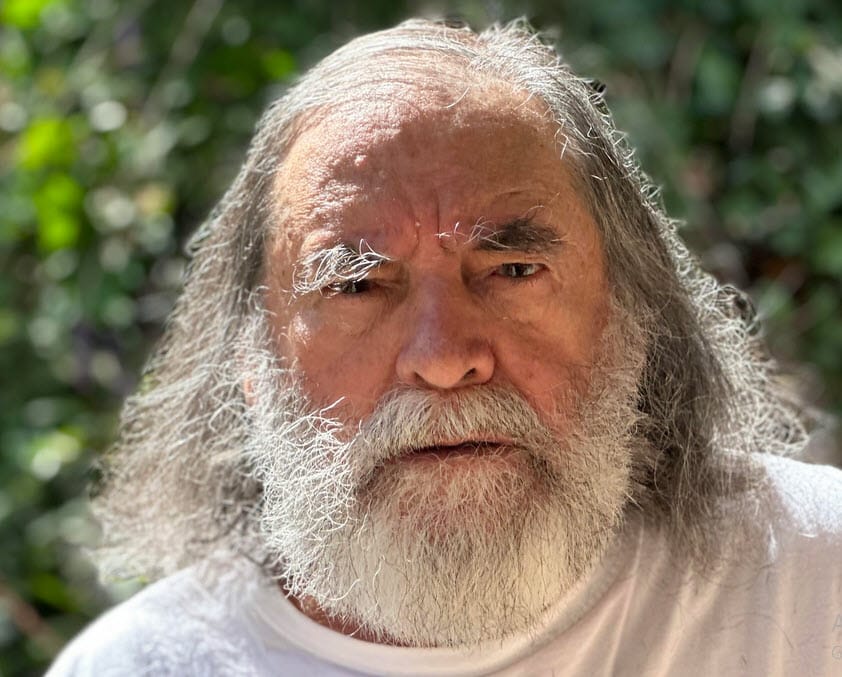
Phillip Macumber
Director, Phillip Macumber Consulting ServicesDr Phillip Macumber holds a BSc with majors in Geology and Advanced Geomorphology, a BA in Philosophy of Science and Middle Eastern Studies, and a PhD in Hydrogeology.
Read more

A joint initiative between the University of Bergen
and CMI – Chr. Michelsen Institute
This talk argues that groundwater—rather than climate or sea level alone—was the decisive factor shaping long-term human occupation in eastern Arabia. While climate and sea-level change are often treated as synchronised drivers of habitability, archaeological and geological record shows that, on human timescales, these processes often diverged, creating uneven and unstable settlement conditions.
Arabia provides a compelling case. During the Holocene, rapid climatic shifts from monsoonal to hyper-arid conditions coincided with significant sea-level rise that flooded the lower Tigris–Euphrates valley and expanded the Persian Gulf by up to 200 kilometers. These transformations coincided with the emergence of early Mesopotamian centres such as Uruk and Eridu, but their impacts varied sharply across the region.
Focusing on Qatar—a peninsula extending roughly 200 kilometres into the Gulf—the talk shows how misalignment between precipitation and sea level produced brief and unstable windows of habitability. Over the past 113,000 years, Qatar was occupied for only about 3,000 years, concentrated in two periods: the mid-Holocene and the past 1,100 years. For roughly 5,000 years in between, the peninsula was abandoned.
By contrast, nearby Bahrain sustained continuous occupation and developed into the Dilmun Kingdom, a major maritime trading hub linking Mesopotamia with the wider Indian Ocean. This divergence highlights the stabilising role of regional groundwater systems, which operated largely independently of short-term climatic drying.
The talk concludes that groundwater lies outside conventional climate–sea-level models and must be central to explanations of human resilience, abandonment, and landscape formation in Arabia.
Dr Phillip Macumber holds a BSc with majors in Geology and Advanced Geomorphology, a BA in Philosophy of Science and Middle Eastern Studies, and a PhD in Hydrogeology.
Read more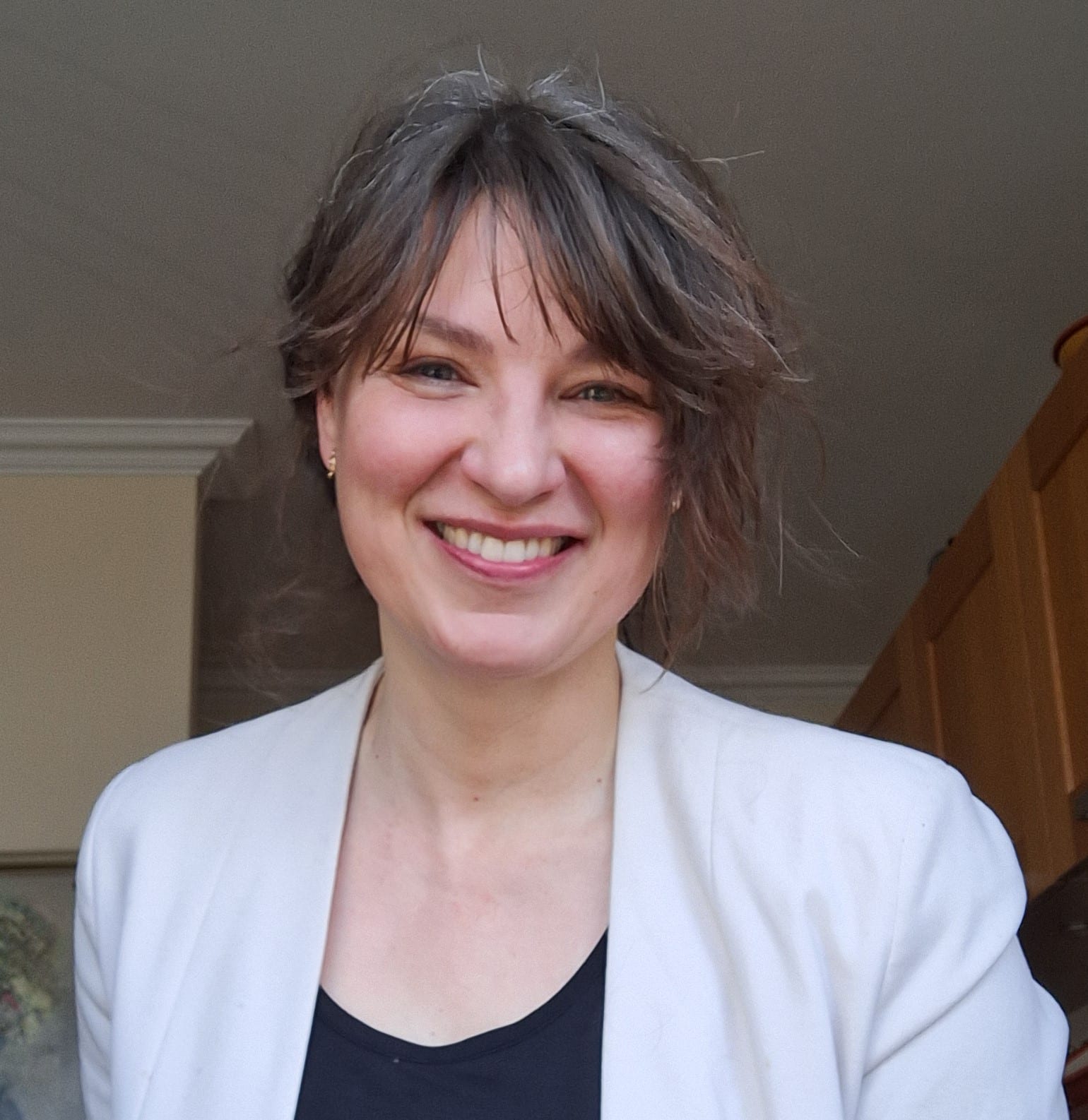
Edyta Roszko is a social anthropologist at the Chr. Michelsen Institute and a Global Visiting Professor in Global History and Human Rights at Lund University (2026–2028).
Read more
Dr Phillip Macumber holds a BSc with majors in Geology and Advanced Geomorphology, a BA in Philosophy of Science and Middle Eastern Studies, and a PhD in Hydrogeology.
His doctoral thesis, Groundwater–surface water interactions in northern Victoria, Australia, was later published by the Victorian Government Department of Conservation and Environment.
He worked for 30 years in Victorian government agencies, including the Groundwater Section of the Department of Mines, the Department of Water Resources, and the Department of Conservation and Environment. During this period, he chaired an interdepartmental committee addressing the major salinity crisis affecting southern Australia, contributing to early understandings of its causes and to policy frameworks for its management and long‑term coexistence (‘living with salt’).
Dr Macumber later spent seven years in the Sultanate of Oman, working on seawater intrusion into coastal aquifers for the Department of Water Resources and eventually serving as Head of the Hydrogeology Section. On returning to Australia, he founded Phillip Macumber Consulting Services.
From 2009 to 2015, Dr Macumber was geomorphological advisor to the University of Copenhagen archaeological team at the UNESCO World Heritage site of Al Zubarah in Qatar. His book, The Role of Water and Landscape in the Occupation of Qatar (Qatar University Press, 2025), examines how groundwater, sea‑level change, and climate shaped long‑term habitability and patterns of occupation in the Qatari peninsula.
Edyta Roszko is a social anthropologist at the Chr. Michelsen Institute and a Global Visiting Professor in Global History and Human Rights at Lund University (2026–2028).
Bergen Global is a joint initiative between the University of Bergen and Chr. Michelsen Institute that addresses global challenges.