Lovise Aalen
Research Professor, CMIAalen is a political scientist focusing on democracy, governance and women's employment and empowerment in the Horn of Africa.
Read more

A joint initiative between the University of Bergen
and CMI – Chr. Michelsen Institute
Ethiopia, Eritrea, and Sudan realtions are tense, raising fears of broader regional escalation.
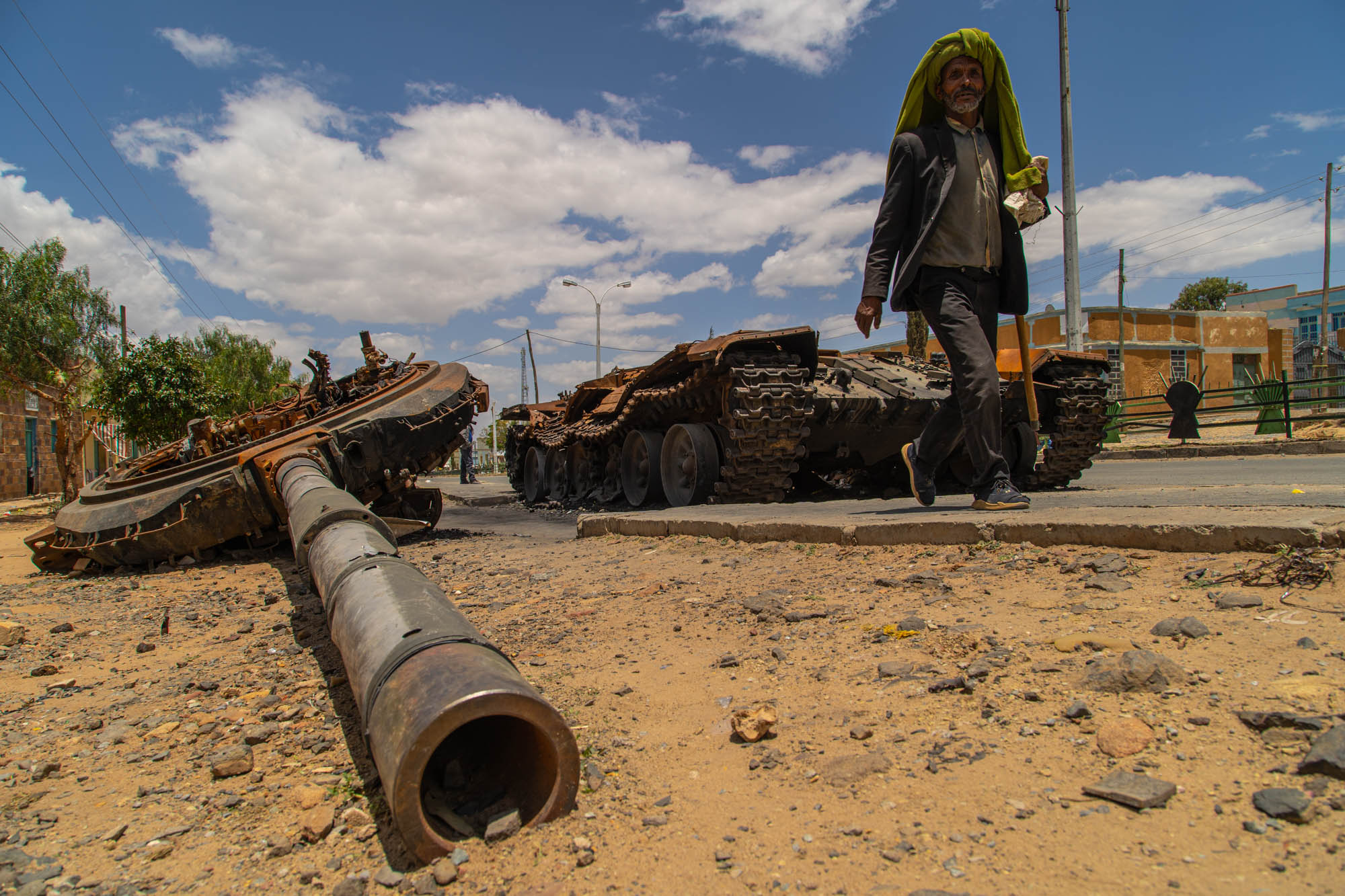 Yan Boechat/VOA
In September 2026, conflict returned to Ethiopia’s Tigray region, raising concerns about a new humanitarian crisis and the potential for wider regional instability. As fighting continues, the war is reshaping alliances and increasing tensions across the Horn of Africa.
As in the devastating 2020-22 Tigray war, the Tigray People’s Liberation Front (TPLF) is once again confronting the federal government of Prime Minister Abiy Ahmed. What is different this time is that the TPLF and the Oromo Liberation Army (OLA) have allied with a former enemy, the Amhara Fano militias, who fought with the federal government during the 2020-22 war. Eritrea is alleged to support this coalition, while Sudan is widely seen as sympathetic to forces opposing Addis Ababa.
Since September, federal forces and the newly established Tigrayan Peace Forces have pushed the TPLF out of the regional capital, Mekelle. The movement is now waging a guerrilla campaign from rural parts of Tigray. Meanwhile, relations between Ethiopia, Eritrea, and Sudan remain tense, raising fears of broader regional escalation.
As developments unfold rapidly, this panel will examine the latest military and political dynamics, assess the humanitarian consequences for civilians, and explore the risk that the renewed Tigray conflict could evolve into a wider regional war.
Aalen is a political scientist focusing on democracy, governance and women's employment and empowerment in the Horn of Africa.
Read more
Amanuel Kebede is a PhD candidate at the Faculty of Law, University of Helsinki.
Read more
Mulu Beyene Kidanemariam is a Ph.D. candidate at the Faculty of Law, University of Bergen.
Read more
Aalen is a political scientist focusing on democracy, governance and women's employment and empowerment in the Horn of Africa.
She has researched Ethiopian politics for the last two decades. She has focused on the implementation of ethnic federalism, the EPRDF’s ideas of revolutionary democracy and the developmental state, regime-youth interactions, and female political participation in authoritarian contexts. She has also written about Chinese support to education and training in Ethiopia.
Amanuel Kebede is a PhD candidate at the Faculty of Law, University of Helsinki.
Kebede’s researches digital authoritarianism and legitimation, focusing on authoritarian strategies for information manipulation and control. His research interests span technology and authoritarian rule, nationalist mobilization, and the political economy of development in Ethiopia.
Mulu Beyene Kidanemariam is a Ph.D. candidate at the Faculty of Law, University of Bergen.
Mulu Beyene Kidanemariam’s research focuses on the legal and human rights dimensions of maternal death reviews and accountability in maternal health governance.
He holds a law degree from Addis Ababa University, Ethiopia, and pursued graduate studies at the University of Oslo, Norway. Prior to joining the University of Bergen, he taught law at Mekelle University, Ethiopia.
Born and raised in Tigray, he has closely followed developments related to the conflict in the region and has contributed public commentary on its legal and humanitarian dimensions.
Bergen Global is a joint initiative between the University of Bergen and Chr. Michelsen Institute that addresses global challenges.