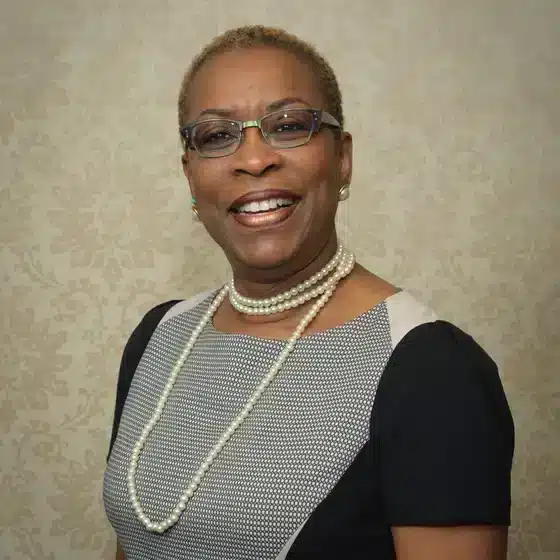
Dianne A. Williams
Lecturerer, Columbia UniversityDianne A. Williams is lecturer in negotiation and conflict resolution at Clumbia's School of Professional Studies,
Read more

A joint initiative between the University of Bergen
and CMI – Chr. Michelsen Institute
In postcolonial justice systems, vulnerability is not only a shared human condition; it is also a product.
 Mélissa Jeanty / Unsplash
In postcolonial justice systems, vulnerability is not only a shared human condition; it is also a product.
Drawing on twenty-five years of work inside courts, police services and ministries across the Caribbean and East Africa, Dianne Williams argues that vulnerability is manufactured by institutional design, then located in the bodies and communities that carry it, while sovereignty is reaffirmed through that very production.
Through two cases, eastern Congo and East African domestic workers in the Gulf, the lecture introduces the concept of nested extraction and a sovereignty-vulnerability nexus, and asks what it would take for accountability to travel upward.
This lecture is part of the PhD course ‘Gender, Sexuality and Vulnerability in Theory and Methodology’, hosted through a partnership between the National Research School in Gender Research and the University of Bergen’s Centre for Women’s and Gender Research (SKOK).
The lecture open to all
Dianne A. Williams is lecturer in negotiation and conflict resolution at Clumbia's School of Professional Studies,
Read more
Dianne A. Williams is lecturer in negotiation and conflict resolution at Clumbia's School of Professional Studies,
Dr. Williams brings a wide range of international conflict-related training experience. She has a strong background in the Caribbean and Latin America, in particular around criminology, conflict resolution, mediation, restorative practices, restorative justice and cultural competency.
Bergen Global is a joint initiative between the University of Bergen and Chr. Michelsen Institute that addresses global challenges.